200 years ago, the world was a very different place. There were no Apple watches and skyscrapers. Hell, I don’t think they have plastic cups! In Southeast Asia, especially polities near the sea, you can see ports. Some are big ones where kings resided and took charge of. They are so wealthy and powerful that workers, traders, scholars and diplomats visited the ports to earn a living, spread the gospel or establish political relations.
All kings would certainly try all they can to ensure their ports stay prosperous as long as they wanted it to be – which is forever – before they lose the status as one. All the kings knew that there was once a proud trading, maritime empire that collapsed due to the conceit and narrowmindedness of their own – not to their neighbors, but to a group of albinistic people who spoke in gibberish who we would later call them the Portuguese. Due to bitter diplomatic disputes, they had enough of Malacca’s antics and captured Malacca, and the people who lived and worked there fled to the surrounding ports for refuge. The king fled south to where we call Johor. Carrying each of them where remnants of Malacca’s cultural values, laws, languages, religion, ideas, bureaucratic systems – and the parable of the fallen kingdom to boot – which fertilized the coastlines of the Malaysia and Indonesia.
That was an extra 300 years ago. Things have changed a lot since then; we have other groups of Europeans called the British and Dutch who not only challenged to take over Portuguese Malacca – which they succeeded – but also schemed to seize other important islands like Penang, Java and Maluku. To get rich via trade is one; to monopolize the source of wealth which allured the Europeans to come to the distant Southeast Asia in the first place, is another. Maluku islands were known as the spice islands – a paradise of nutmegs. Nutmegs might not be appealing to you at all, but in those times, they were prized as much as gold. Nutmeg, both with mace (the weblike, red material that encapsulates the seed of the nutmeg), were highly sought by Europeans for seasoning, food preservation and medical purposes.
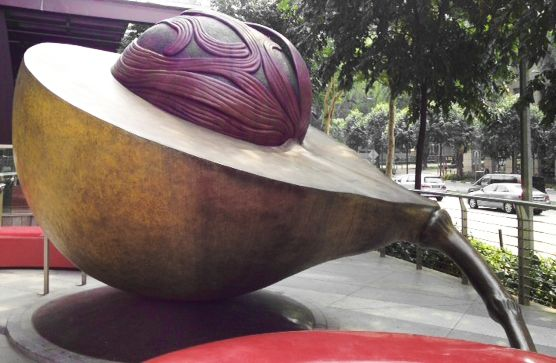
At the other side of the globe, a continental war was raging on. At the centre of the maelstrom was Napoleon, who was defending a nascent republic from the onslaught of monarchs who fear the rise of a new political order in Europe. the Dutch handed Malacca, along with Java, to Britain to prevent France from claiming this valuable port before he defeated the Dutch. The Dutch and the British might have rivalries in Southeast Asia, but they don’t want an extra European player to complicate the situation in the region.
After the abortive invasion of Russia, Napoleon retreated, only to find himself ganged up by the rest of the European powers. He abdicated the throne and was banished to Elba – the Napoleonic wars were finally over; British should now therefore return Malacca and Java to the Dutch. While the Dutch were slowly reclaiming their authority over the colonies they owned before the wars, the British plotted a secret plan to snatch a new port near the south of the Malay Peninsula before it legally falls into the Dutch hands. The head of the Southeast Asian headquarters appointed a relatively young man to lead the mission. He was nobody but Sir Stamford Raffles.
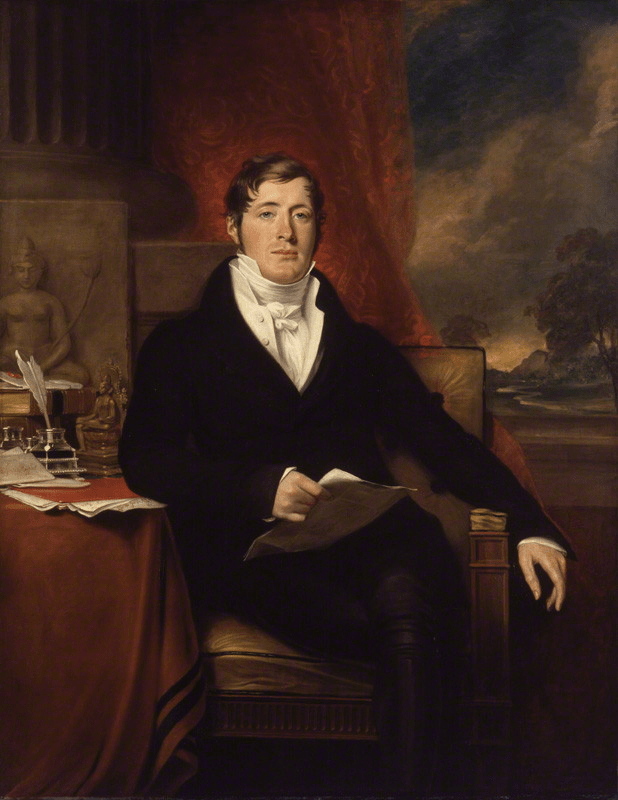
Apart from living in the times with Napoleon, Raffles was born into an interesting era. The first steam-powered locomotive was patented. Morphine was successfully isolated. Wild ideas such as the method of science, free trade, liberalism and individualism started to spread. The British parliament was beginning to consider the abolition of slave trade.
At the same time, imperialism was taken to a new dimension. When Raffles was a teenager, he must had heard the news of the bankruptcy of the VOC. VOC was perhaps the first ever multi-trillion dollar trading company in the world, they held extreme power in conduct international trade and even wielded political and military power which allows them to lobby for trade, or wage wars on those who swerved the Dutch economic interest. It was said that VOC was richer than Apple, Google and Facebook combined, but it made terrible loses due to the Dutch war against Britain. Therefore, the another multi-trillion dollar company, the English East India Company (EIC) superseded the title as the largest corporation, and continued to use and abuse its inflated powers like the VOC.
Raffles was born from a poor family. His father was a trader selling sugar, rum and slaves in the Caribbeans. He failed to complete his education because his family cannot afford it, and went to the EIC at the age of 14 to serve as a clerk. At work, everyone recognized his boundless energy and diligence, and another ten years of training and mastery, his mentor, who saw his tremendous potential encouraged him to hold a post in Penang. Young ambition men like him agreed to take up the offer.
When spending time in Penang then in Malacca (remember Malacca was still under Britain’s hands), he met a variety of interesting people who would later inspire him to achieve the things we would later recognize him to be: John Leyden was obsessed with foreign cultures and linguistics. William Marsden wrote a treatise on the history and society of Sumatra, a huge island in Indonesia. He met William Farquhar who had a seasoned career in the region, and was passionate about collecting exotic flora and fauna found in Southeast Asia. Brushing shoulders with brilliant seniors made him an avid student of languages, cultures, natural history and history of Asian lands. Raffles was set to join a bunch of explorers, collectors and writers who engaged with these disciplines who we call the Orientalists, and they were the intellectual celebrities of the time. [1]
Thanks to his hustling lifestyle, his career culminated when he was appointed to be the Lieutinant-Governor of Java. This means that he had the highest authority governing Java, an island with a population near that of his own country at that time. He was catapulted to stardom when was knighted for writing the History of Java. Stamford Raffles became Sir Stamford Raffles.
Now, he has a new mission to find a port. He knew there was a royal succession dispute in among the Malays: after the death of the king of the Malay world (called the Sultan), a conflict erupted on who should take the throne. The elder brother Prince Hussein or his younger step-brother Prince Abdul Rahman. In the dance of powers and coalitions, Prince Abdul Rahman seemed to have a greater prospect – the Bugis and the Dutch wanted him to become the next sultan. Raffles, sensing the opportunity, decided to approach Prince Hussein and tell him that if he is willing to lease a plot of land in Singapore, Britain would recognize Hussein as the Sultan. The deal was sealed in 1819, and Singapore was now in the hands of the British.
He returned to his original post in Bencoolen, Indonesia, while the governance of new piece of land was entrusted to Farquhar (the senior he knew at Malacca). Farquhar built Singapore from scratch when Raffles was away by attracting an exodus of traders and labourers in Malacca to migrate to Singapore. When Raffles returned to Singapore, he enacted changes based on the ideas he read from the popular books of his time: he abolished slavery, placed Western law practices on the locals, ensured Singapore to be a free port. He drafted the town plan that molded the urban shape of downtown Singapore today. He also pushed for the establishment of schools. He read of the ancient Malay texts which recounted when Singapore was the capital of the Malay civilization, purported founded by a Hindu prince named Sang Nila Utama (fun fact: the prince named the island of Singapore “Singapura”, translation of “lion city” Sanskrit). Raffles wanted revive the glory days by teaching the locals of their own language and history. He did all this in 18 months, and went straight back to London after that, and never came back.
And oh boy you have to see how Singapore have become.

Raffles passsed away in 1826. Singapore was then a town of about 13,000. There were people from all around the world doing business and investing. When the century went on, technological advances, trade, cunning diplomacy, and the vagaries of geopolitics opened new countries like China, Malaysia, Myanmar, Africa to enrich the British Empire, sending it to the apex of international dominance. Singapore, serving as a crucial entrepot to facilitate trade to serve the empire, developed spectacularly – and the English took notice. People were impressed by the metamorphosis of this once fishing village into a cosmopolitan emporium. They wanted to know who did it.
Raffles’ wife, Sophia, published a biography on his husband, detailing his life and achievements in Southeast Asia. The book was a best seller. People admired his rags-to-riches story, his intelligence, diligence, inclination to science and foreign cultures, and his die-hard moral convictions on slavery and education. His bold move to create a free port in Singapore proved the virtues of free trade to the English economy. He became a posthumous icon of the great British Empire. He was revered and commemorated as the great men who contributed to the ascendancy of his own country, but also to spread virtuous ideals and practices to the “barbarous” countries. Statues, busts, books of Raffles were honored in England and in Singapore during the colonial days.
In the beginning of the independence movement, there were many instances where Singapore tried to remove the statue of Raffles, to symbolize the inception of a renewed nation. However, since Singapore’s independence in 1965, the ruling party of Singapore – PAP – insisted on retained the statue. The reason they claim where pragmatic, not ideological: The statue was kept on public display to unite the different ethnic groups in Singapore with a similar historical narrative, under an “ethnically neutral” Englishman. Second is that it symbolizes Singapore friendliness to her ex-rulers to welcome European multinationals to set up offices and factories in Singapore. Since then, people were thought to revere Raffles as the founder of Singapore. In 1969, celebrating 150 years since Singapore’s founding, the late ex-PM Lee Kuan Yew was flattered when his visionary leadership was compared with Raffles.
In recent decades, the national myth of Raffles was slowly whittled away by academics, artists and historians. They say that Raffles was a hypocrite, a genocide perpetrator, a lousy colleague, a pimp, a fraud. In the Bicentennial, where Singapore celebrates the 200th year since the founding of Singapore (by Raffles!), the legacy of Raffles was officially questioned, certainly in less flamboyant terms. Rather than starting Singapore’s history on the founding year by Raffles, they wanted to stretch back Singapore’s history to 1299 – 700 years ago – to the founding of “Singapura” by Sang Nila Utama. Stories were written about to weave in the gaps between 1299 to 1819, to prove that Singapore wasn’t a boring fishing village which met a dramatic turning point the moment Raffles stepped on the land. Also, other historical figures contemporary with Raffles were revealed from the shadows. The stories were told to make the point that the founding of colonial Singapore wasn’t a one man show. A vivid account on William Farquhar’s governance may convince us that the Farquhar might be the true founder of Singapore – not Raffles.
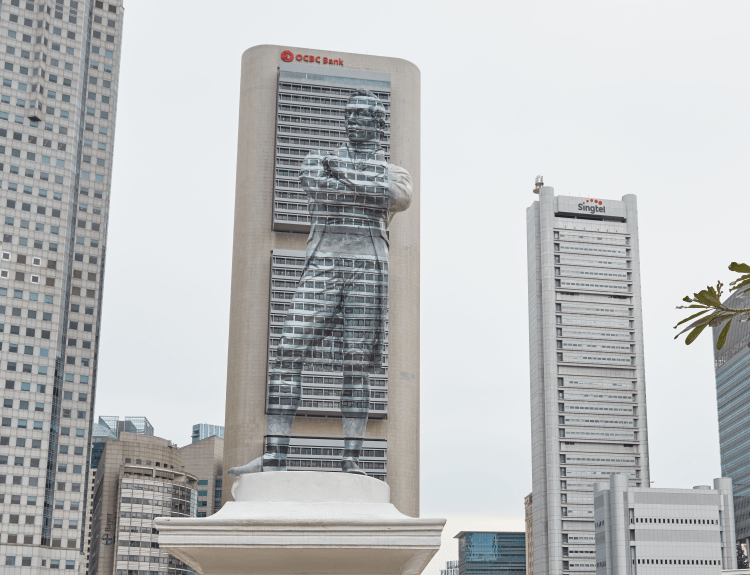
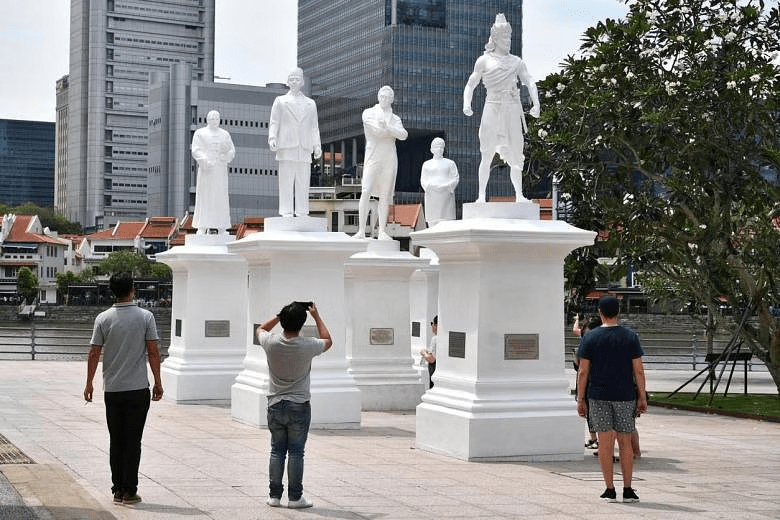
I wasn’t really interested on how the people aforementioned think about him – they their own agendas and predictably produce ideas in line of their goals and beliefs (how effective they are panned out is an entirely different question). For those who accuse him of being an imperialist, I would say that he was a product of his time. He acts and expresses according to the script and outlook that he breathed. [3] Our present assessment about Raffles is more of a reflection of the zeitgeist we belong than of true representation of Raffles himself. Just like Raffles, we, living in a script and outlook of our own, will be judged by future generations. And who knows, their opinions of us might sound preposterous, even repelling, to our ears?
I am more interested about his qualities and how it brought him success and failure. Raffles was a complicated man: his intelligence and drive impressed many of the people around him, which explains his achievements and his acclaim in London in a relatively young age. His bravado and naked ambition sparked envy to some, and that he made some enemies along the way, but not so many as to thwart his aspirations. One of his adversary was Farquhar. There are many proves that Raffles took credit of Farquhar’s work, and spread unfounded rumors and slanders against Farquhar to ruin his career, and clearly Farquhar was very upset of Raffles’ conduct and sued him. The case was a let down, and Farquhar was not allowed to hold a post again. When he died, his tomb
But shouldn’t he knew of Raffles character when he met him, heard stories about him in Penang, and came to the conclusion that Raffles can be a threatening person to be with? Shouldn’t he had kept Raffles in check before seeing him grew into a intractable beast? I read about Farquhar and I find him a likeable person, but unlike the inclination of the majority, I don’t sympathize with him for being so whiny when he can do better to stop all this from happening right at the start. Farquhar was fortunate to have history swing to his favour (maybe more so in the future).

Maybe I am being insensitive to Farquhar’s situation, but I think I am being kind. There are many Farquhars in real life don’t get what they deserve within their lifetime, let alone having someone who’d be willing to spend a chunk of their life to share your concealed virtues 200 years later. If I had to choose between Raffles and Farquhar, I’d rather be Raffles – because I get what I want. If I am Raffles, who are those Farquhars in your life who complain and grumble, and shows no threat to you? As Glendinning wrote in the biography about him, “the price to be paid [for success] was the resentment of those less gifted and enterprising.”
Notes:
[1] Similar to the fourth-wave feminist, gender studies and post-colonial scholars in Anglophone countries today, but more on that next time.
[2] Technically, the people of those days don’t call themselves Malays. They identify themselves to the city, kingdom or king they hold fealty or allegiance to.
[3] Indeed, he created something unique by the personality and inclination with the same recipes and canvas we picked up throughout his lifetime.
Bibliography:
Alatas, H. (2020). Thomas Stamford raffles: Schemer or reformer. NUS Press.
Barnard, T. P. (2019). Commemorating raffles: The creation of an Imperial icon in Colonial Singapore. Journal of Southeast Asian Studies, 50(4), 579–598. https://doi.org/10.1017/s0022463420000077
Frost, M. R., & Balasingamchow, Y.-M. (2009). Settlement 1819-1824. In Singapore: A Biography (pp. 40–81). essay, Didier Millet.
Kevin, T. Y. L. (2012, July). Raffles and the Founding of Singapore: An Exhibition of Raffles’ Letters from the Bute Archive and the National Library. BiblioAsia, 8, 4–9.
Glendinning, V. (2018). Raffles and the Golden Opportunity, 1781-1826. Profile Books.
Jie, P. (2018, December 28). Sir Stamford Raffles was a monster. so what? RICE. Retrieved October 26, 2022, from https://www.ricemedia.co/current-affairs-commentary-stamford-raffles-monster-bicentennial/
Mohd Nasir, H. (2019, January). Stamford Raffles’s career and contributions to Singapore. Infopedia. Retrieved October 26, 2022, from https://eresources.nlb.gov.sg/infopedia/articles/SIP_715_2004-12-15.html
Ng, Y.-S. (2016). Quek, H., Koh, N., & Junaini, H. (2019, April 4). A conversation between 4 people who are not raffles. RICE. https://www.ricemedia.co/culture-people-conversation-4-people-not-raffles-bicentennial/
Raffles displaced. BiblioAsia. Retrieved October 22, 2022, from https://biblioasia.nlb.gov.sg/vol-16/issue-4/jan-mar-2021/raffles
Sa’at, A., Joraimi, F., & Sai, S.-M. (2021). Raffles renounced: Towards a Merdeka history. Ethos Books.
Turnbull M. C. (2020). The New Settlement, 1819-1826. In History of modern Singapore, 1819-2005 (pp. 29–82). essay, NUS Press.
Wright, N. (2018). Sir Stamford Raffles’ – A Manufactured Hero?
Wright, N. H. (2019). William Farquhar and Singapore stepping out from raffles’ shadow. Entrepot Publishing.
 Randolph Yew
Leave a comment