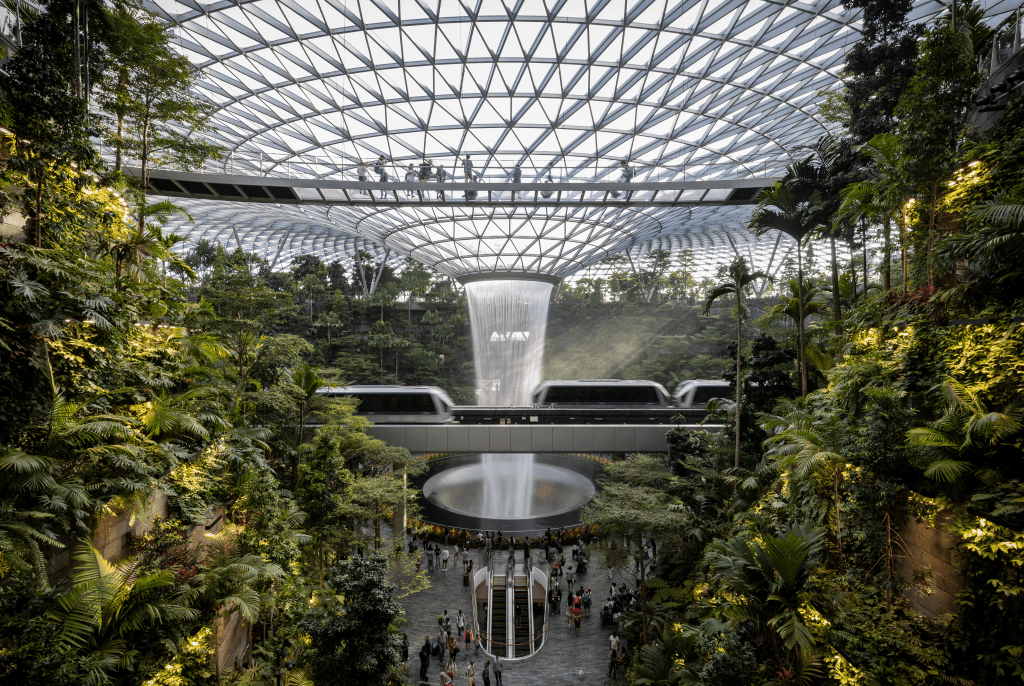
Remember the first time you land on Singapore? What is the first impression seeing the country? Being a tour guide in the country’s national museum, I asked plenty of tourists on this very question in the beginning of my tour. I have heard many answers:
“There are so many shopping malls here!”
“This place is so green!”
“The food is delicious!”
There were many more.
However, after several tours, I noticed a pattern in their answers. Interestingly, it was the same impression I had when I visited the country myself. It may not appear obvious for Singaporeans, but it was too obvious for the outsiders.
That the country is perfect – too perfect.
Touch down Changi airport, you pull your luggage over the passenger boarding bridge, and on a immaculate, dust-free carpet floor. You call the taxi, and take a cruise on the East Coast Expressway skimming the coast. Skimming past are rows of luxuriant trees and well-tended flowerbeds, and on your right you see beautiful condominiums, on your left supertankers and cruise ships dotting the Singapore Straits. Go to the downtown, and you can stroll along clean promenades, enjoy speckless skyscrapers or shop in the grand malls in Orchard Road and Marina Bay. If the modernity bores you down, drop yourself into nature’s embrace found in the Gardens by the Bay, or the romantic cultural districts in Chinatown, Little India, or the Malay area at Kampung Glam. No taxi? No problem. Hop on the modern subway, or electric buses sweeping through the network of roads. You can pretty much get anywhere in the country.
Singapore is not only an impressive city in the eyes of the tourists. The country also attracts the admiration and jealousy of mayors, leaders, urban planners, engineers, policy makers and economists around the world. Once leader of China Deng Xiaoping constantly turned to Singapore for inspiration on his own country’s nation-building [1]. Respected academia and thought leaders hail Singapore as a paragon of successful urban development. Many foreign mayors courted the city-state to create mini-Singapores in their own country. Now, Singapore’s remarkable achievements in public housing programmes, mass digitization of trade and public service, successful mitigation of traffic congestion, integration of nature and city, and ambitious infrastructural, technological and city planning projects to tackle sea-level rise, biodiversity loss, water scarcity, extreme urban density makes Singapore a talking point in the international sphere.
Of course, just like everything else, some hold uncharitable opinions about the country. Western observers warn the world about Singapore’s lack of creativity and cultural vibrancy, apparent political suppression, and violation of human rights – a famous Western writer even called the country “Disneyland with a death penalty”. Foreigners who had stayed in the country for a while invariably find the cutthroat work culture and rat-race mentality deeply entrenched into the national identity (my Malaysian friends in university confessed that they felt stressed out the moment they landed on Singapore)[2]. Some even commented on how Singapore’s culture was completely Westernized, and that most of the ethnic heritage and buildings have been washed out for mass consumption by tourists.
Living in Singapore for 3 years, I find that both sides got something right about Singapore. I decided to study deeper. I read many books, articles and research papers (you can find them in the References section if you want to know more). I also listened to people – old and young – in my social group, in professional events, in lectures halls, and my workplace in Singapore. Interestingly, as I learn more about the country, I realized that the good and the bad things in Singapore are two sides of the same coin. To see how it is the case, we need to go back around 60 years ago. To the years when Singapore had no Changi Airport, no Marina Bay, To the years when crime and chaos flamed the entire nation.
You are currently in page 1 of this blogpost. Please click on 2 below to continue reading
 Randolph Yew
Leave a comment