The real estate is evolving fast. Lower interest rates, contech, AI, alternative investments and sustainability – for an outsider, the rapid changes and their complex interactions can appear wildly confusing. Since I plan to join the built environment industry after I graduate, I was anxious when I realized I felt the same.
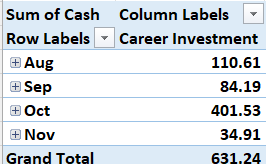
So, for the past 4 months, I spent 631.24 Singapore Dollars to attend as many conferences, talks and webinars pertaining to the metamorphosizing real estate industry, particularly to sustainability aspect of it. Some of them were big paid events like the International Built Environment Week (IBEW), some of them were free online webinars I found in LinkedIn. Let me share you what I learned.
The green building movement is driving the sustainability transformation around the world
If you ask me about sustainability a few years ago, the first few things that comes to mind are cow burps, plastic bags, acid rain and melting ice caps. But seriously, just a few years ago, you won’t use the word “sustainability” in the first place – “climate change” was the buzzword at the time.
Since then, the concept of sustainability has dominated the environmental conservation and spread to many parts of the world. Global warming is no longer a debate but a necessity. The body of knowledge behind this paradigm shift to have deepened and matured. Concepts like circular economy, renewable energy, energy efficiency has become more common in how we see the world.
The sustainability movement has certainly infiltrated many sectors in the economy, but never faster and deeper than the architectural industry. The Green Building Movement, sprung up amidst the energy crisis during the 70s when people had fears on resource and energy depletion, slowly influenced the leading schools and famous practitioners of the time [1]. In the 80s, the concept of “Total Performance Building (TPB)” was born. It sees the function of a building not as a place to sleep, work and eat, but as a closed complex system that influences our health, happiness and social well-being while reducing excessive use of natural resources like energy and water. [2] This idea was further developed and standardized into what we now recognize as green building certifications such as LEEDs and BREEM in the 90s [3].
The green building movement has grown strength by strength since the 90s. Today, in most developed countries, it is standard for new developments to have some green building certification. In developing ones, green building tend to fetch better prices for developers [4]. Due to economic and regulatory pressures, the architectural (and to some extent, the engineering industry) has nurtured many green building professional into sustainability experts, when manufacturing, finance and transport industries were slow in nurturing their own. Now, when the world is hungry for sustainability experts, they turned to the green building professionals for talent and expertise, and the rich knowledge that the green building ecosystem has established over the decades. In fact, many green building professionals have pivoted to other industries due to this trend.
Systems thinking is an essential skill more than ever
The phrase “system thinking” is no stranger to those who goes to sustainability conferences regularly. However, I haven’t heard anyone define what system thinking means. Here’s my attempt of doing so:
Systems thinking is the ability to understand a problem in the context of the complex relationships with disparate components. A system thinker recognizes that a change in one element may lead to change to other elements within the system.
To illustrate, consider a car engineer: today, he has a choice to use aluminum or steel to make a car. If he chooses aluminum. His car could be more efficient due to the its light weight. On the other hand, if he chooses steel, he could potentially sell cheaper cars due to the lower price of steel.
Then, he realizes while aluminum is as strong as steel and highly recyclable (so maybe cheaper to manufacture in the long term), it is hard to work with. You would need highly skilled welders to build a car with aluminum frame, which increases overhead cost for building an aluminum car. However, steel is not an obvious choice either. It is susceptible to corrosion and has relatively poor shock absorption capability. The production of steel emits more greenhouse gas emissions too.
In reality, there is no clear winner which material should be used to make the car. Most company use a mix of both. As the car industry continues to innovate, the debate about steel vs aluminum rages on.
Deciding between aluminum and steel illustrates the complexity car engineers navigate to build a sellable car. As car users, we know there are more features in a car, like thermal comfort, safety, low maintenance requirements, aesthetics, cool software, storage capacity… all that we crave and love. All these extra considerations not only affect cost and weight of a car, but also affect each other. And don’t get me into the backend aspect of car manufacturing like supply chain, assembling technique and manpower coordination! This not only poses more problems for engineers to solve, but necessitate a more sophisticated understanding of how each of these features can potentially complement or undermine the other features in the car. This understanding is what we call systems thinking.
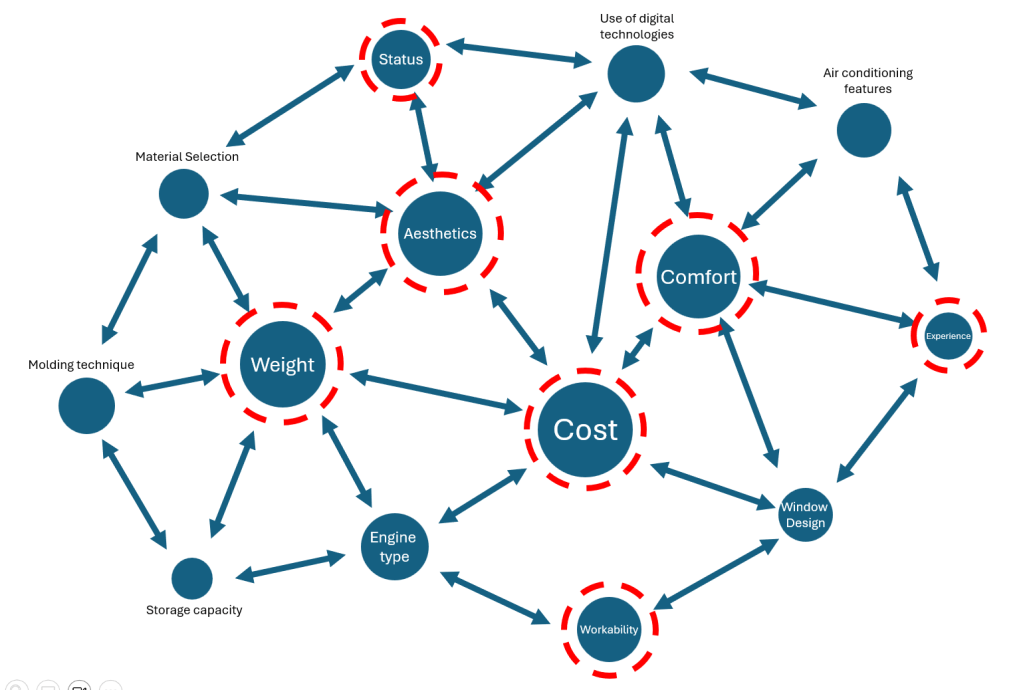
From this example, it is clear that the more things we desire from a product or any complex system, the greater the need to think in systems. Imagine people just want cars that have four wheels that can move them to the closest supermarket. No nice exterior, no headlights, no need to feel comfortable, no need to hit more than 10km/hr, don’t bother about the price. Car engineers won’t be torturing their heads as much today!
Climate change is possibly the largest problem that most of us will try to solve in some way or another this century. Not only it is a complex, multifaceted topic that covers economics, justice, technology, policies and ecology – each with properties and subsystems that could influence the other topics in a multiplicity of ways. What makes climate change a even more slippery problem is that we have many requirements and targets on how success should look like, and some are in conflict with each other. That is why system thinkers become much more important these days.
But in my view, there are plenty of system thinkers who live with us today. I mentioned engineers, but system thinking is also an essential skill for many professions like policy makers, architects, successful entrepreneurs, urban planners and ecologists – anyone who is dedicated to work on complex problems with no easy solutions. [5]
That being said, the sustainability movement will challenge these professionals expand the domain in which they use this skill even further. This means that built environment professionals are compelled to dabble on other seemingly unrelated disciplines: civil engineers may need to learn about environmental science (WSUD and Nature-based Solutions); mechanical engineers may need to learn about data science and artificial intelligence (Smart buildings and Predictive Analytics); developers may need learn to become energy investors (Virtual Power Plants and Renewable Energy Credits); asset managers and mortgage underwriters may need to learn about meteorology (Physical Risk), urban planners and architects may need to learn about physics and modelling (building physics and microclimate analysis). The list is endless and growing.
This doesn’t mean that people should be jack of all trades and master of none – professionals and experts will always have a valuable place in the world. The real consequence is that these professionals will have to cross lives with people they previously thought they never would. Like it or not, they have to master languages from the world of others to have a successful career in their own.
Data is a challenge
How can we solve complex system when we don’t have insight on the current state of it? To decarbonize effectively, it all comes to good information. But the problem is, we don’t really have much of them.
Just to backtrack a bit. Before getting data, you should want to know what kind of data should you get in the first place. So far, according to Ms Esther An, who was the Corporate Sustainability Officer of a popular real estate company, there are 600 sustainability reporting standards in the world. [6]
Aspiring corporate sustainability officers: no need to panic! Because unlike the veteran CSOs, you just need to deeply understand one. International Financial Reporting Standards (IFRS), an international government body that develops accounting standards that are used nearly everywhere, launched its Sustainability Disclosure Standards (S1 and S2) on 26 June 2023. IFRS, being the main authority that standardized how financial statements should be prepared worldwide [7], is attempting to do the same for sustainability disclosure.
So the standards are set. The issue now is that many companies just don’t have reliable data to disclose sustainability performance. You see, when you report your carbon emissions data, we need to report 3 types of carbon emissions data. Not only that you should report the carbon you direct contribution to (we call that Scope 1 and Scope 2), you should also report the carbon emitted by your supply chain (Scope 3).
The big companies, having all this money and manpower, and sustainability-conscious investors and clients breathing close to their necks, have tried all they can to cover the first two “Scopes”, which they have full control over. What frustrates them is that their suppliers are not motivated to do so. From what I heard, most of them are SMEs that have limited capital. They don’t see the point of putting so much time and energy reporting their carbon emissions if there is no compelling benefit to do so. Paying someone to prepare financial statements of your company is expensive enough, now you want to pay another team to report your sustainability status?!
Even you have the dollars to report your Scope 1 and Scope 2 for your client’s Scope 3, you don’t stop there. Your big clients might ask you to cut your energy consumption or water consumption or whatever environmental parameter that your big client is concerned about. Then you have to spend another round to learn how to fix it, actually fixing it, and check if the fix was effective. The expenses are endless and uncertain; companies think it is just not worth it.
Good news! Many consultants, startups and government agencies had risen up to the occasion to collect Scope 3 data that everyone is looking for. Some expand their assessment beyond carbon, such as environmental and social impacts. Life Cycle Assessment, Danish Institute for Human Rights and other tools are making inroads to the corporate world. The progress is much slower and labor intensive as you might think, as it requires a great deal of trust building with the suppliers to agree giving out information. Nonetheless, the progress is there.
The built environment industry needs a technological revolution
I notice that on the stage of these events, there seems to be an underrepresentation of engineers and technology entrepreneurs. Most of the panelists and guests were consultants (architects, corporate consultants, CSOs, academia) or capital allocators (bankers, asset managers).
Don’t get me wrong, technological innovation still happening in the real estate industry. Many facility managers, manufacturing companies, university and venture capital startups are doing commendable work as we speak. Digital-enabled HVAC systems, electricity storage systems, modular and robotic construction, digital twins, low-carbon concrete, energy generating building facades, nuclear energy are developing in the small city-state, and some organizations like Singapore Green Building Council hold events to share latest technology innovations in the built environment. But if you look at most of the public events pertaining to sustainability and real estate, the builders are not at the center stage.
Why? My first guess is that engineers are not taught to show off in the real estate industry. Unlike architects who are tasked to impress the owner, engineers are tasked to cut cost and make sure there are no problems in the building. We talk to architects when they had a cool idea in designing buildings; while we only turn to the engineers when the lift is not working or when a building collapses. We have star architects, but no such thing as star engineers. Engineers, whose career goal is to avoid the limelight, are just not interested to talk about themselves in a conference.
Another guess is that real estate has historically been a risk averse business. Real estate, among other financial instruments, are less risky. Institutional investors park their money in real estate due to its consistent returns, not expect to gain big profits. Adopting new technology can be costly and time consuming too from a Capex and Opex perspective. If they are honest, most real estate owners would tell you that they see sustainability not as a business strategy but a regulatory requirement. Aside from the one-upmanship in certificate scoring, climate technology in real estate is adopted just to keep the government agencies happy rather than making profit [8]. This makes the engineers NPCs rather than MVPs. Hence, engineers are shunned in these events.
Third guess: there is a lack of talent to accelerate innovation in engineering. In Singapore, just like in many countries, hard engineering is not considered a sexy career. The young generation are brought up in the environment where finance, consulting, and digital technology are seen as dream jobs with high pay and many perks. These sectors also have Zuckerbergs, Buffets and Jobs that the real estate engineering industry don’t. Let’s face it, high achieving, ambitious graduates tend to apply for jobs in McKinsey, Goldman Sachs and Tiktok, not Arup, Cushman and Wakefield, and KTC. Civil, mechanical and electrical engineers have low pay, long hours, poor recognition of your work, for a long time, graduates are just not into that. Subsequently, engineering companies have fewer brains and feet, hence lack something to show for themselves.
Whatever the reason is, we know we need them more than ever. Consultants and financiers know this. They know that many of the existing buildings needs to be retrofitted to improve their performance, but no one has really came up a solution to do so cheaply and to scale. Many developers wanted to use low-carbon concrete and versatile solar panels, but the cost just does not justify the purchase. Many construction companies are hungry to adopt robots for construction, but the innovation is tragically slow. The current bottleneck in the sustainability movement is the lack of technical execution.
Don’t wait. Forge your own path now.
Reading to this point, I talked about data challenges, cost challenges, regulatory challenges, and investor mindset challenges that exist in the real estate industry. The challenges are extensive and significant, and frankly, overwhelming.
Forget all of them for now. Because from my view, it seems that among the sea of problems we face in this front, we have two big meta-problem at hand. Solving these two problems, all pieces would naturally fall into place.
They are the lack of community building and creative leadership.
First is lack of community building. One interesting thing about attending these events is that many of the people I met often stumble on their words. It does not mean that they are stupid, unprepared or just bad at their job. Most of the issues that we take for granted only appeared a few years ago. The newness of these problems made their attendant solution equally nascent. So nascent, that many people haven’t found the right word to articulate about them! A new discourse in this subset of the industry will definitely develop and propagate, but to accelerate this progress, it is essential to create most spaces for experts and like-minded individuals to come together and talk about them. Through the discussions, debates, sharing of knowledge and experiences, we would temper our mental tools to communicate important perspectives to the outside world.
That is why attending public events such as workshops, seminars, conferences, exhibitions, public lectures, guided tours and networking events are so important. I see them as occasion where cross-fertilization of ideas could occur, the occasion where we talk about what we know, what we don’t know, and what are the problems and achievements we have done. After the event, everyone learns new things from each other. When we go back to work, we do things a little bit different than the day before. New lessons and new problems would crop out and feed back to the same community.
Second is the lack of creative leadership. This is difficult to come by. Creative leaders are individuals who are willing to step out of their comfort zone and embrace the budding dynamic subset of the real estate industry. They are candidates who hold themselves to the upmost standard of excellence and integrity. They understood that action and failure is the best teacher in the world, and are not impressed by the pretentious many who veil their cowardice with unfeeling analysis and pithy criticisms. They had a keen eye on opportunities when others see crisis. They are impatient with actions and patient with outcome. When they face a problem, they separate themselves by seeking answers rather than waiting answers to come to them.
Creative leaders are rare, but they exist. Against all odds, Tesla succeeded in proving to commercialize electric vehicles to the public, inspiring many companies to accelerate sustainable transport around the world. When most developers see sustainability movement as a impediment, some developers see it as a business opportunity and built Parkroyal Pickering and Pan Pacific Orchard. Lastly, Mr Lee Kuan Yew and his team turned Singapore from a sleepy fishing village into an attractive global metropolis, arousing respect from leaders around the world.
What differentiates them from the pack is not their superior intelligence, gifted talent or incredible charisma. What are creative leaders because they have a vision that they are passionate in realizing. This vision is a mental point of origin. So robust and steady, that it is unperturbed by setbacks, criticism and uncertainty.
Creative leadership the ember, community building the crucible. Combine them together, we can create a perfect engine that propels the real estate industry in perpetual evolution. But for this to happen, we need to take action now.
So what are you waiting for?
[1] Many of the sustainability concepts and technologies we are familiar today were popularized during the oil crisis in the 70s. Life Cycle Assessment, Eco-cities, Solar Panels, Circular Economy are examples just to name a few.
[2] Prof Lam Kee Poh was the pioneer of Total Performance Building in Singapore, designing iconic buildings such as the URA Centre and National Library
[3] There are also other types of building certifications such as WELLs and Wirescore that pertain to wellness and digital sophistication in buildings. They are growing in popularity as developers are looking new ways to differentiate their buildings in a green building saturated market. The most nascent one is LEAF in Singapore, focusing on biophilic features and nature-integration.
It is not public knowledge, but it is found that many “green” buildings caused harm to biodiversity. For example, NTU’s ADM building, a Green Mark Platinum building internationally known for its green communal rooftops slick design, was a perfect graveyard for birds. Birds collisions on the curvy curtain wall, averaging on one death per day. [link]
[4] In developing ones like Indonesia where green buildings are still scarce, building a certified green building fetches better price for the developers (they call it green premiums).
[5] They are rare, but there are a group of self-proclaimed system thinkers are just armchair experts who likes to fluff with visually appealing power point slides. From my experience, they are generally strategy and management consultants. But use your own judgement.
[6] Someone asked Esther what standard should a company start if it plans to prepare its first sustainability report. This is what she said: “CDP (scope 3), GRI (impact), ISSB (value).” Might be useful for you.
[7] Except the US. The US companies uses GAAP (Generally Accepted Principles and Practices) as the standard to prepare financial statements, and it would likely use US own standards for sustainability reporting.
[8] I recognize there are interesting work by engineering consultants and asset managers to improve asset value by improving building performance (particularly energy efficiency), but examples are few in between. Most real estate asset manager want just to know that their building gets the highest green building certification in the jurisdiction, and most developers just want to fulfill similar goals in their new developments. I will mention an example later on, but there are very few developers and asset managers who see sustainability as a big opportunity just like AI. No real estate company would just want to earn a certificate that are building is AI enabled right?
The attitude of risk and opportunity on the sustainability movement by real estate players is a interesting topic that I wish to delve into in my next post.
Other remarks
I am extremely grateful for all the busy people I met who took the time to answer my questions, clear my doubts. Even I would likely not remember your name (still working on my name memorizing skills!), I will remember your faces and the generosity. When I become your age, I promise to keep this tradition alive.
When I am not, I will continue pestering you!
 Randolph Yew
Leave a comment